
Holiday Pet Hazards: Which Foods, Decorations and Plants Are Dangerous for Dogs and Cats
The main holiday hazards for dogs and cats are on the table and under the tree: chocolate, anything sweetened with xylitol, grapes and raisins, fatty scraps and turkey or chicken bones in the kitchen; lilies for cats; and tinsel, ribbon, wires, batteries and snow globes among the decorations. If your pet eats one of them, do not wait for signs. Note what and how much, keep the packaging, and call us first at (801) 516-7004 or the ASPCA Animal Poison Control Center right away. We see urgent and emergency cases during business hours when staffing and hospital capacity allow, and a true emergency belongs at the nearest 24-hour emergency hospital.
The rest of this guide walks a house room by room, shows how fast each hazard can cause trouble, and explains what happens when you call, whether you are hosting in Mountain Green, Morgan, Ogden or Layton.
If Your Pet Already Ate Something: The First Ten Minutes
The order of these steps matters. They come from the ASPCA's poison guidance and from our emergency care page, which asks you to call first.
- Move your pet away and pick up what is left. Keep the wrapper, box or plant tag. The label tells a veterinarian what the product contains, and our team asks you to bring the packaging if you have it.
- Write down what, how much and when. The ASPCA asks owners to note the amount eaten.
- Call before doing anything else. Call us at (801) 516-7004, or call the ASPCA Animal Poison Control Center, whose number is on that page. The ASPCA notes that a consultation fee may apply.
- Do not make your pet vomit unless a veterinarian tells you to. Our team's guidance is that with some substances it makes things worse.
- Do not wait for your pet to look sick. Several holiday toxins act fast, and others look fine for hours before the serious damage shows. The timing table below explains why.
We see urgent and emergency cases during business hours when staffing and hospital capacity allow, so call first, before you get in the car. On the phone we confirm how quickly we can see your pet and what to do on the way. Outside business hours, we offer after-hours care to established clients when a provider is available, so call us first. When we cannot see your pet fast enough, or a pet needs overnight monitoring or specialist care, we say so plainly, and a true emergency belongs at the nearest 24-hour emergency hospital.
How Fast Trouble Can Show: A Timing Table
A pet who seems fine is not necessarily safe. Here is what the sources say about timing. For chocolate, grapes and raisins, lilies and fatty scraps, call as soon as you know; do not wait for signs.
| Hazard | Most at risk | What it can do | Timing the sources describe |
|---|---|---|---|
| Xylitol (sugar-free gum, mints, some peanut butters, baked goods) | Dogs | Low blood sugar (FDA), possible liver damage (ASPCA) | Low blood sugar can begin 10 to 60 minutes after eating; some serious effects may not appear for 12 to 24 hours (FDA) |
| Macadamia nuts | Dogs | Weakness, vomiting, tremors, overheating | Signs usually within 12 hours (ASPCA) |
| Snow globes (ethylene glycol, the chemical in antifreeze) | Dogs and cats | Kidney failure | Dogs may seem to recover about 12 hours after drinking antifreeze; kidney failure usually follows in 36 to 72 hours in dogs and 12 to 24 hours in cats (Merck) |
| Bones and gulped treats or chews | Dogs | Blockage or injury of the stomach and intestines | Signs may not show right away and can appear hours to days later (FDA) |
The antifreeze timeline is the one to remember. The Merck Veterinary Manual says the outlook worsens as more time passes between ingestion and treatment, and that antifreeze has a sweet taste. The ASPCA warns that the sweet smell of a broken snow globe can draw pets to it.
The Kitchen and the Table
Holiday cooking puts a lot of risky food within reach. The ASPCA's advice is simple: keep your pet's diet the same as on any other day. A small piece of boneless turkey is fine; the rest of the plate is where trouble starts.
- Chocolate. The ASPCA lists vomiting, diarrhea, hyperactivity, abnormal heart rhythm, tremors and seizures, and it can be fatal. Dark chocolate, baking chocolate and cocoa powder carry the highest risk. If your dog eats chocolate, the FDA says to consider it an emergency and call your veterinarian immediately.
- Xylitol. This sweetener hides in sugar-free gum and candy, mints, some peanut and nut butters, baked goods, toothpaste and mouthwash, and it may be labeled birch sugar or wood sugar. In dogs it triggers a release of insulin and a drop in blood sugar that, untreated, the FDA says can quickly be life-threatening.
- Grapes and raisins in stuffing, fruitcake and cookies. The ASPCA says exposure can lead to kidney damage in dogs.
- Onions, garlic and chives. They can damage red blood cells and cause anemia. The ASPCA notes cats are more susceptible, though dogs are at risk too.
- Fatty trimmings and turkey skin. The FDA says high-fat foods can cause pancreatitis, which can be painful and life-threatening.
- Turkey and chicken bones. The ASPCA lists them as a holiday hazard, and the FDA explains why: a bone can get stuck in the esophagus, windpipe or stomach, and broken, pointed fragments can injure a dog from the inside.
- Raw yeast dough and alcohol. Dough can rise in the stomach and cause painful bloating, and as it ferments it produces alcohol. The ASPCA lists alcohol as a cause of vomiting, incoordination, breathing trouble and, in severe cases, death.
- Snack bags. The FDA warns that a dog who pushes its head into a chip or cereal bag can suffocate.
The Tree, the Mantel and the Gift Pile
The ASPCA's decoration list makes a good checklist, and the FDA adds ribbon and string.
- Tinsel and ribbon. The ASPCA says cats find tinsel hard to resist, and swallowed it can cause blockage, severe vomiting and dehydration, and may need surgery. The FDA says ribbon and string can cause serious stomach and intestinal damage. Decorate with something other than tinsel, and gather ribbon and string as soon as gifts are open.
- Wires and batteries. A chewed wire can deliver a dangerous shock, and a punctured battery can burn the mouth and esophagus.
- Glass and plastic ornaments. Broken shards can injure the mouth and digestive tract.
- The tree itself. Secure it so it cannot tip, and cover the water stand, which can grow bacteria that upset the stomach.
- Snow globes. Keep them out of reach and clean up any breakage completely.
- Candles. Never leave a candle unattended, menorahs included. A pet can knock one over and cause burns or a fire.
- Salt-dough ornaments. Even dried, they can cause life-threatening electrolyte imbalances. The FDA adds that homemade play dough is a risk for the same reason.
Plants: Lilies First
If you have a cat, lilies are the plant to keep out of the house. The ASPCA says many lilies are highly toxic and can cause kidney failure in cats, so check holiday bouquets before they come through the door.
The other holiday plants are less dangerous but still worth keeping out of reach. The ASPCA says poinsettias can cause mild to moderate stomach irritation, and it lists mistletoe and holly as causes of stomach upset and heart and circulation problems, while the FDA notes that severe mistletoe poisoning is uncommon and usually takes a large amount. Faux plants remove the question entirely.
Guests and the Front Porch
- Guests' medications. The ASPCA suggests asking houseguests to keep their medications in a closed cabinet rather than in a bag or suitcase on the floor.
- Ice melt. The ASPCA says ice melt can cause life-threatening electrolyte problems. If you salt your porch or driveway for holiday guests, choose a pet-friendly product.
What Happens When You Call Us
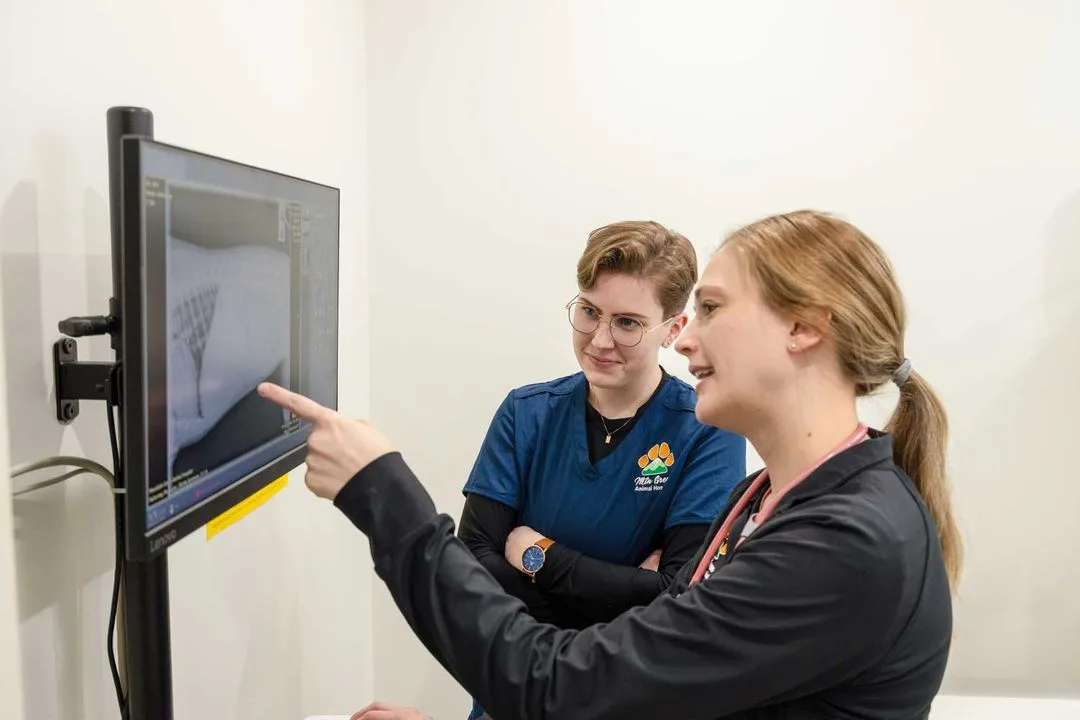
When you call (801) 516-7004 about something your pet ate, tell us what happened, and we tell you honestly how quickly we can see your pet or whether a 24-hour emergency hospital is the better place. We see urgent and emergency cases during business hours when staffing and hospital capacity allow. If you come in, our veterinarians can run bloodwork in our in-house laboratory and take digital X-rays on site, which help with concerns such as swallowed foreign objects. Diagnostics and treatment are discussed with you before we proceed, and our current prices are listed on our pricing page.
For stomach upset that started a day after the party, a pet who is off their food, or any change you are unsure about, call (801) 516-7004 to arrange a sick and urgent care visit. For planned visits, you can book an appointment online.
Frequently Asked Questions
What holiday foods are toxic to dogs?
The main ones are chocolate, anything sweetened with xylitol, grapes and raisins, macadamia nuts, onions and garlic, raw yeast dough and alcohol. Fatty scraps and turkey or chicken bones are not poisons, but they can cause pancreatitis, blockages and internal injuries.
Are Christmas trees and poinsettias poisonous to cats?
Poinsettias can cause mild to moderate stomach irritation. The bigger tree risks for cats are tinsel and ribbon, which can cause blockages, and the tree water. Lilies in holiday bouquets are the serious plant risk for cats.
My dog ate a little chocolate and seems fine. Should I still call?
Yes. The FDA says that if your dog eats chocolate, consider it an emergency and call your veterinarian immediately, so call us first at (801) 516-7004. We see urgent and emergency cases during business hours when staffing and hospital capacity allow, and a true emergency belongs at the nearest 24-hour emergency hospital. Have the wrapper handy.
How long after eating something toxic will my pet show symptoms?
It depends on what was eaten. In dogs, xylitol can lower blood sugar within an hour, macadamia nut signs usually show within 12 hours, and a dog who swallowed antifreeze from a snow globe can seem to recover before kidney failure sets in. That is why calling right away matters more than waiting to see.
Who do I call if my pet eats something on a holiday when you are closed?
Call us first at (801) 516-7004. We see urgent and emergency cases during business hours when staffing and hospital capacity allow, and we offer after-hours care to established clients when a provider is available, and we will tell you plainly if a 24-hour emergency hospital is the better place. You can also call the ASPCA Animal Poison Control Center, where a consultation fee may apply. A pet with serious signs belongs at the nearest 24-hour emergency hospital without delay.
Our Latest Stories
Book an appointment online
Dr. Nicole Sorensen and Dr. Dani Poll care for dogs and cats in Mountain Green, UT.
Exam and consultation $70, prices posted